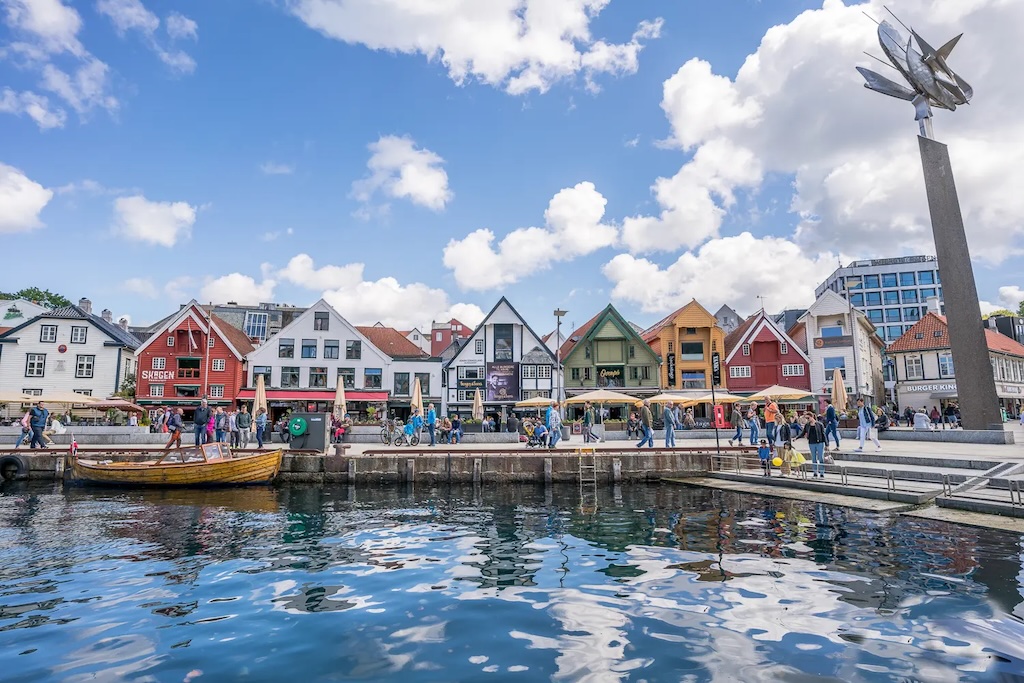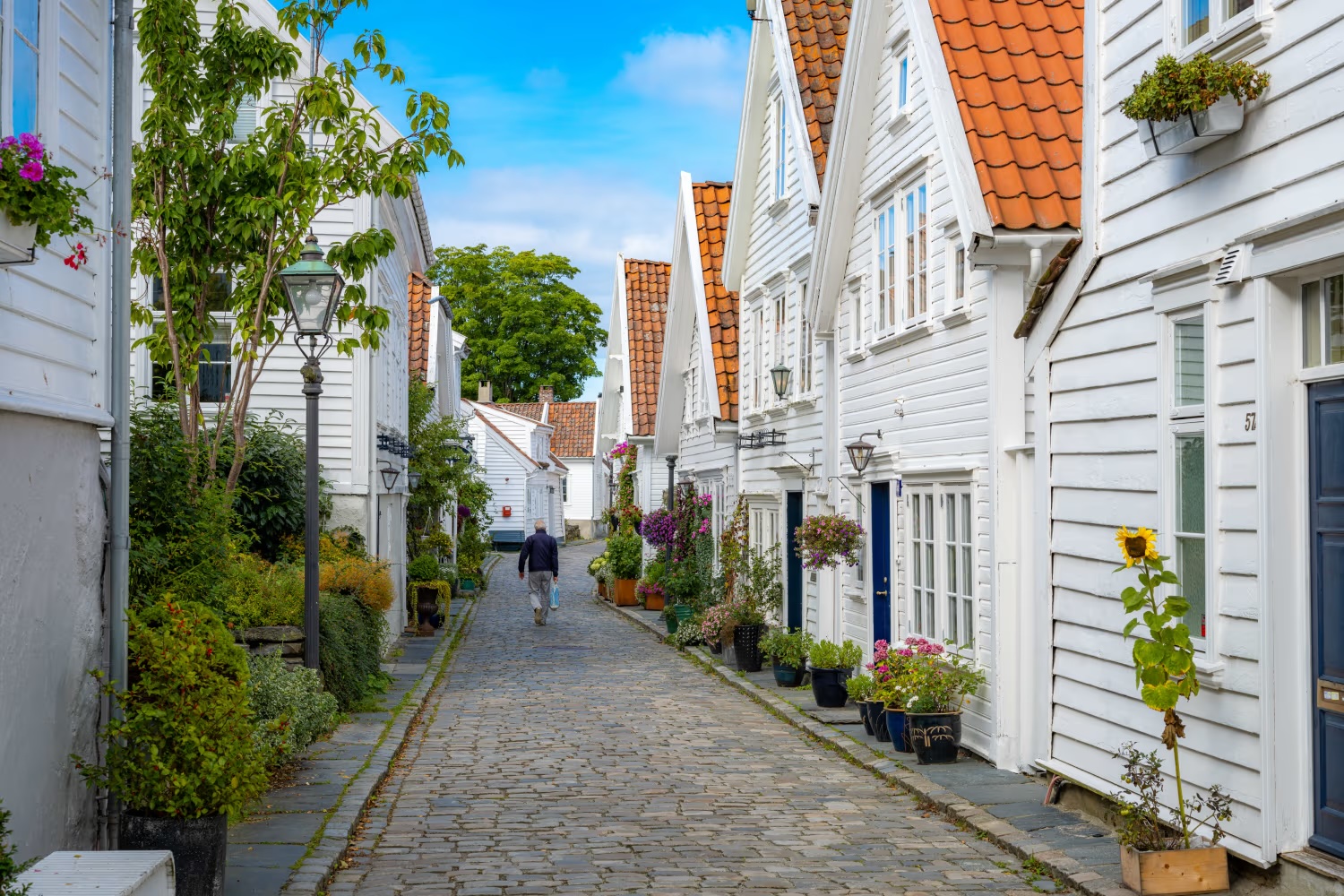
The Stavanger region is Norway’s third-largest city-region, with approximately 300,000 inhabitants, including around 132,000 in the city itself. Located on Norway’s southwestern coast, Stavanger is characterized by a mild coastal climate and close proximity to sea, fjords, farmland, and low-lying landscapes. The city’s compact scale allows everyday life, cultural activity, and access to nature to coexist within short distances.
Stavanger developed from a small harbor town into a regional center through fishing, shipping, and later industrial activity. In the 1960s, offshore exploration in the North Sea marked a turning point in the city’s modern history, supported by its harbor facilities and international transport connections. From the mid-1970s, energy-related industries played a major role in shaping the region’s economy and global orientation.
Today, Stavanger remains a key center for energy and technology while undergoing a significant green transition. Drawing on long-standing offshore competence, the region is increasingly focused on renewable energy, offshore wind, hydrogen solutions, as well as carbon capture and storage. This shift reflects a broader commitment to sustainability and environmental responsibility.
For many years, the Stavanger region has been among Norway’s most productive and internationally connected economic areas, known for adaptability and innovation. These qualities extend beyond industry, influencing the city’s academic, cultural, and institutional life.
Nature is a defining presence in Stavanger. The coastline, islands, beaches, and nearby fjords are easily accessible from the city center, while the mild climate supports outdoor activity and agriculture throughout much of the year. The region’s green surroundings and environmental awareness form an important backdrop for the Quinquennial IMS Congress in 2027.
Stavanger welcomes participants to a city where urban life, sustainability, and international exchange are closely intertwined.